Healthy Aging and Cognition
Cognitive ageing is where good evidence exists and marketing most frequently outruns it.
What the Evidence Supports Beyond Any Memodyne Routine
Major expert reviews have converged on a reasonably consistent set of factors associated with cognitive health across a lifetime.
Physical activity. Blood pressure management. Not smoking. Managing diabetes. Correcting hearing loss, where uncorrected loss is associated with faster decline. Education and continued mental engagement. Social connection. Managing depression. Limiting alcohol. Sleep quality.
A striking share of that list is cardiovascular. What is good for blood vessels appears to be good for the brain, which is part of the reasoning behind circulation-focused ingredients like ginkgo — and also the reason the behavioural interventions matter so much more, since they act on the same system far more powerfully.
Normal Ageing Versus Something That Needs a Doctor, Not Memodyne
Worth distinguishing clearly, because the anxiety in this area is real and frequently exploited.
Normal age-related change tends to be gradual, affects retrieval speed more than the memories themselves, and does not interfere with independent living. Taking longer to recall a name is not the same as not recognising the person.
What warrants assessment: changes that are worsening, that interfere with daily tasks, that others have noticed, or that come with confusion, disorientation or personality change. Several causes are treatable when identified early.
Reading Cognitive Ageing Claims Around Memodyne and Elsewhere
This category attracts some of the least responsible marketing in the supplement industry, because the fear it targets is genuine.
Claims worth rejecting outright: that a supplement prevents, treats or reverses dementia or Alzheimer's disease; that it reverses cognitive decline; that it repairs the brain. No supplement does any of these.
Worth crediting where it happens: the official Memodyne source states plainly that the product is not a treatment for dementia or Alzheimer's, and publishes its drug interactions openly. That is more responsible than the category norm, and it is fair to say so.
A Note on Huperzine A, Memodyne and Alzheimer's Medication
One specific point deserves emphasis on a page about cognitive ageing.
Huperzine A works on the same enzyme system as donepezil and rivastigmine, the prescription medications for Alzheimer's disease. That means someone caring for a family member on those drugs might reasonably assume a memory supplement would help — and this is precisely the combination to avoid without medical supervision.
If you are supporting someone with a diagnosis, their prescribing doctor is the person to ask before adding anything, including this.
If you are worried about your memory
Memory changes that are getting worse, interfering with daily life, or worrying the people around you deserve a proper medical assessment rather than a supplement. Several causes — thyroid problems, B12 deficiency, medication side effects, depression, sleep apnoea — are treatable when identified early.
Memodyne is not a treatment for memory loss, dementia or Alzheimer's disease, and this website does not present it as one. If someone in your life is showing memory changes, please encourage them to see a doctor.
More Memodyne Articles
Cognitive Health Basics
What actually shapes how well you think across decades, and why the strongest evidence sits with things nobody can sell you.
FoundationsMemory and Daily Wellness
How memory actually works, what genuinely improves recall, and which everyday factors quietly degrade it.
FocusFocus and Mental Clarity
Why focus is mostly an environmental and physiological problem rather than a willpower one, and what actually helps.
Ingredient scienceBacopa and Memory
One of the better-researched botanicals in cognitive supplements, and why the timeline matters more than the dose.
Make Memodyne Part of Your Daily Routine
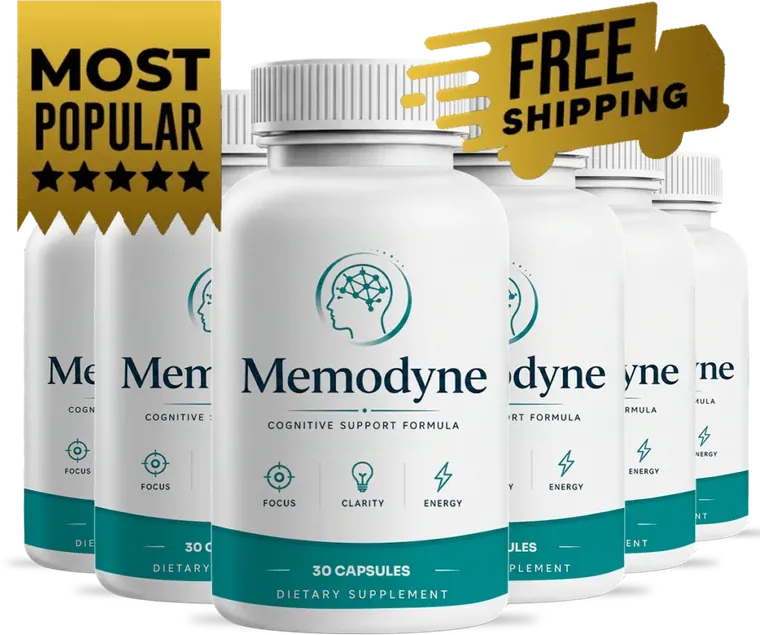
One capsule a day with water, ideally in the morning before a meal, alongside the sleep, movement and mental engagement that do the heavier lifting for cognitive wellness. Six named ingredients, no stimulants, and a 60-day money-back guarantee on every order.
From $49 per bottle · No subscription · Free shipping on 3 and 6 bottles · 60-day guarantee