Privacy Policy
What this website collects, why, and what it does not do with it.
How Memodyne Pages Handle Your Information
This website provides information about Memodyne. It does not operate a checkout, process payments or maintain user accounts, and it does not ask for your name, address or payment details.
If you follow a link to the official seller, you leave this website. Anything you enter there — personal details, payment information, delivery address — is handled by that seller under its own privacy policy, which is the document governing your order. We never see, receive or store it.
Information Memodyne Pages May Collect Automatically
Like most websites, this one may record standard technical information when a page is requested: IP address, browser type and version, device type, operating system, pages viewed, time of visit and referring page.
This is used to keep the site working, understand which pages are read and identify technical problems. It is not used to build a profile of you as an individual, and it is not sold.
Cookies Used on Memodyne Pages
Cookies are small text files stored by your browser. This site may use them for basic functionality and for aggregate analytics measuring which pages are visited.
Affiliate tracking cookies may also be set when you follow a link to the seller. These record that a visit originated here so any resulting commission is attributed correctly. They do not identify you personally to this website.
You can block or delete cookies through your browser settings without affecting your ability to read anything here.
Health Information and Memodyne Pages
Worth stating specifically, because this website discusses memory concerns and medication interactions.
We do not ask you to disclose any health information, operate no forms collecting symptoms, conditions or medication details, and have no way to associate any health interest with you as an individual.
If you research cognitive concerns online generally, be aware that advertising networks on other sites may infer interests from browsing behaviour. That is a good reason to be thoughtful about where you enter health information anywhere on the web.
Third Parties Linked From Memodyne Pages
Outbound links point to the official seller and, where relevant, to independent health resources. Those organisations operate their own privacy policies, and this one does not extend to them.
Your Rights Regarding Memodyne Site Data
Depending on where you live, you may have rights to access, correct or delete personal data held about you, to object to certain processing, or to complain to a supervisory authority.
Because this site collects very little and maintains no accounts, there is usually little to act on. Data relating to an actual order is held by the seller, and requests about it should be directed there.
Children and the Memodyne Website
This website is intended for adults. Memodyne is a dietary supplement for adults, and we do not knowingly collect information from children.
Changes to This Memodyne Privacy Policy
This policy may be updated to reflect changes in practice or in law. The version published here is always the current one.
Memodyne does not publish individual ingredient dosages
All six ingredients are named, which is more than many products in this category offer. What is not published on the sales page is how much of each one a capsule contains.
That matters, because effect depends on amount. Bacopa research uses defined daily doses of standardised extract; huperzine A is active at microgram level; phosphatidylserine trials commonly used around 300mg. Without figures, none of it can be compared to what is actually in the bottle. No milligram amounts appear anywhere on this website, because inventing them would be worse than leaving them out.
Memodyne and medication: this check is not optional
Two ingredients in this formula carry serious, well-documented interactions. The seller states them openly, and this website repeats them rather than burying them.
- St. John's Wort interacts with SSRIs and other antidepressants, blood thinners, oral contraceptives, immunosuppressants, some HIV and cancer medications, and many other prescription drugs. It speeds up how the body clears certain medicines, which can make them stop working. Combined with an SSRI it can also contribute to serotonin syndrome, which is a medical emergency.
- Huperzine A interacts with cholinesterase inhibitors such as donepezil and rivastigmine — the drugs prescribed for Alzheimer's disease.
- Ginkgo biloba may increase bleeding risk alongside anticoagulant and antiplatelet medication, and before surgery.
If you take any prescription medication, talk to your doctor or pharmacist before your first capsule and show them the label. If you take an oral contraceptive, note that St. John's Wort can reduce its effectiveness.
If you are worried about your memory
Memory changes that are getting worse, interfering with daily life, or worrying the people around you deserve a proper medical assessment rather than a supplement. Several causes — thyroid problems, B12 deficiency, medication side effects, depression, sleep apnoea — are treatable when identified early.
Memodyne is not a treatment for memory loss, dementia or Alzheimer's disease, and this website does not present it as one. If someone in your life is showing memory changes, please encourage them to see a doctor.
Make Memodyne Part of Your Daily Routine
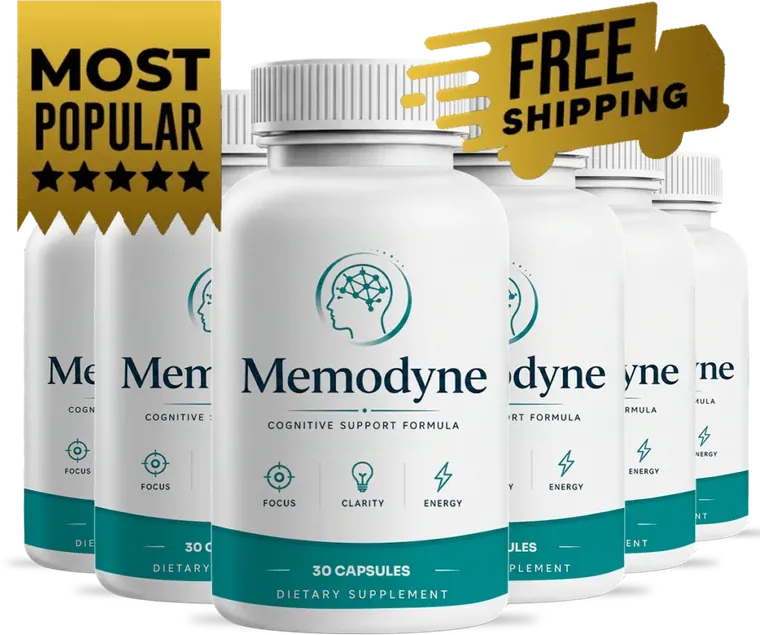
One capsule a day with water, ideally in the morning before a meal, alongside the sleep, movement and mental engagement that do the heavier lifting for cognitive wellness. Six named ingredients, no stimulants, and a 60-day money-back guarantee on every order.
From $49 per bottle · No subscription · Free shipping on 3 and 6 bottles · 60-day guarantee